
About Puerto Rico
Land
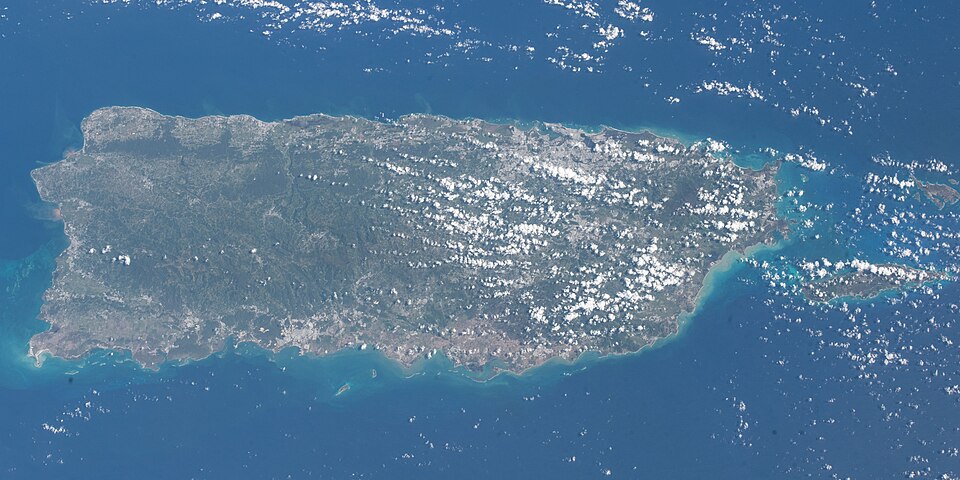
Puerto Rico is an island, roughly 3,500 square miles in area, and located in the Caribbean. It is home to about 3 million people as of 2025. Puerto Rico is mountainous, with almost one-fourth of the island covered by steep slopes (Wagenheim, 2025).
Governance
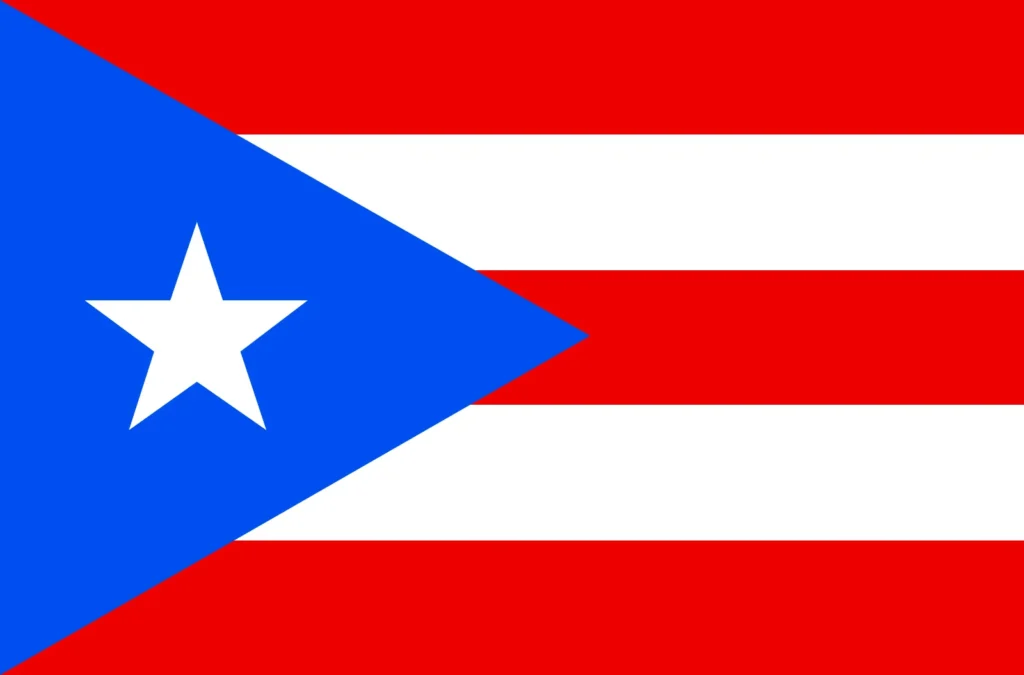
Puerto Rico is governed as a commonwealth, and is considered a “freely associated state” (Matthews, and Wagenheim, 2025) under the United States Government. All Puerto Rican citizens are considered citizens of the United States and have a U..S. House of Representatives Residential commissioner, but they do not have the right to vote in presidential elections. This means that Puerto Ricans are not subject to federal tax.
Shipping
There have been several acts enacted by the United States to define the relationship between itself and Puerto Rico. Notably, the Jones Act (1917) significantly impacts shipping relations between Puerto Rico and the U.S.. Due to the Jones Act, only U.S.-owned and operated shipping vessels may take goods between U.S. ports. The intention of this act was to promote the U.S. shipping industry and increase national security after World War I (Carey, 2017), but it has very different implications for Puerto Rico.
Under the Jones Act, Puerto Rico can receive imports from any foreign country; however, when it comes to imports from the United States, only U.S.-owned and operated ships may transport these goods. Due to a relative scarcity of these ships, Puerto Rico experiences high shipping costs since there are simply not enough ships to supply Puerto Rico with the goods it requires, even from one of the countries it’s closest to. This additionally results in these shipments costing roughly 2.5 times more (Grabow, 2019)
Food Insecurity
Plagued by hurricanes, flooding, and earthquakes, Puerto Rico’s inhabitants are no strangers to disaster. During storms, transportation can be impacted, crops can be destroyed, and access to food is limited. Even during times when the weather is favorable, food production is low and reliance on imports is high. Puerto Rico is currently facing a food crisis. Roughly 40% of Puerto Ricans are estimated to be food insecure (Ostolaza et. al, 2021). This means that they are not always sure where their next meal will come from, or may worry about their ability to get food in the future. Our research has determined that food insecurity is caused by 3 main factors:
Natural Disasters
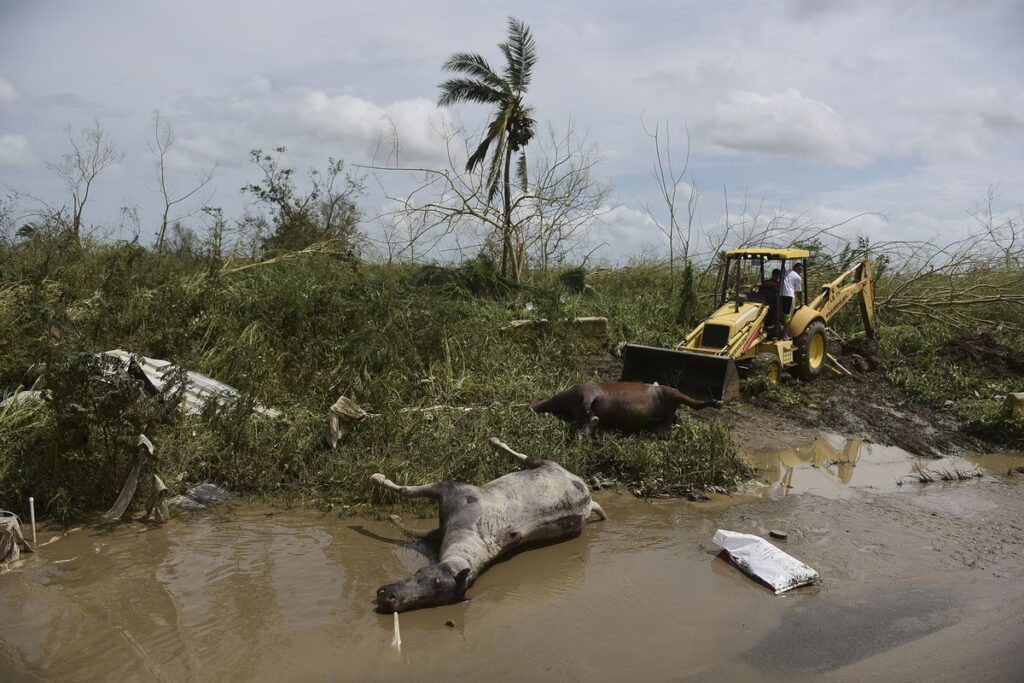
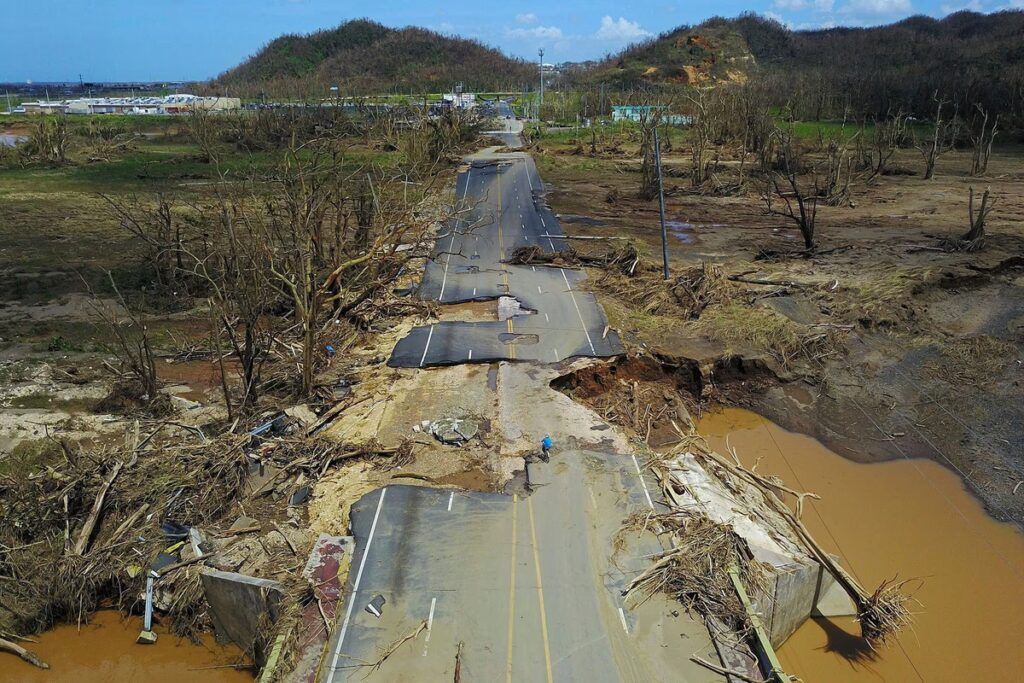
Because of its location, Puerto Rico is in the path of many hurricanes and tropical storms, which destroy crops and buildings, and degrade soil. Grocery stores may be destroyed or permanently closed, as many were after Hurricane Maria (Rodríguez-Cruz, Álvarez-Berríos, Niles). Ports and shipments of food can also be obstructed in the face of hurricanes and inclement weather, causing the prices of food to rise (Mark, de Angel Sola, Rosario-Matos, and Wang., 2025).
Industrialization
Though once home to many farms, over recent decades, Puerto Rico has become more industrialized (Matthews and Wagenheim, 2025). According to USDA reports from 2022, there are currently about 7,600 farms in Puerto Rico, comprising 494,481 cuerdas (about 750 square miles), which is a significant fall from data from 1982, reporting 21,820 farms, comprising 982,457 cuerdas (about 1,490 square miles) (USDA, 2022) (U.S. Department of Commerce, 1982). These numbers represent a roughly 65% decrease in the number of farms, and a 50% decrease in the area of farmland.
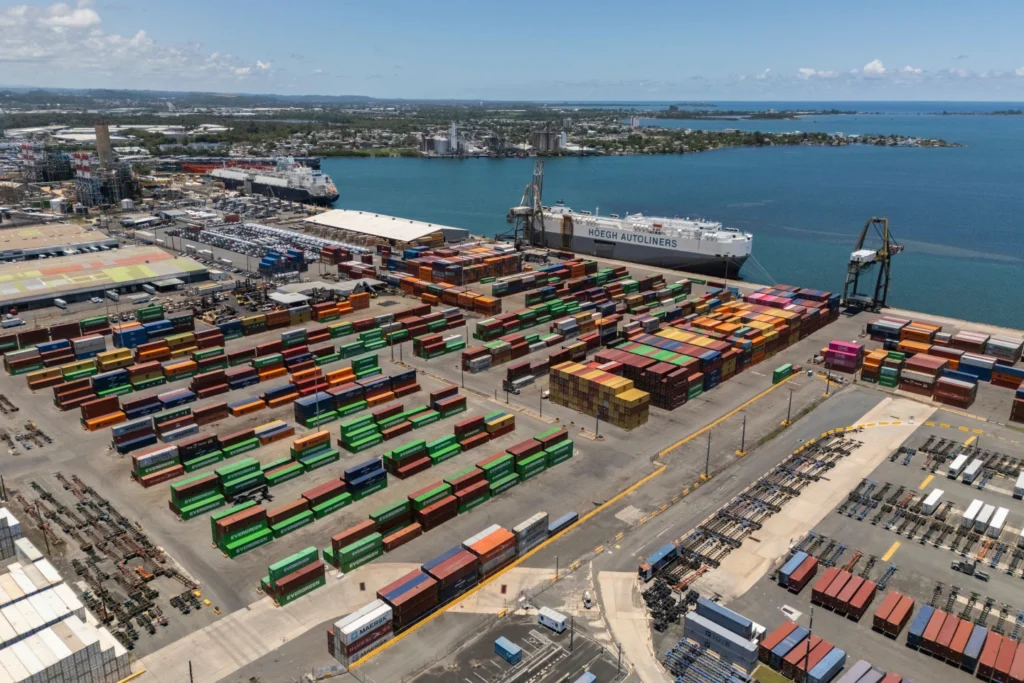
Not enough food is produced on the island for all the inhabitants to be fed in a cost-effective and nutritious manner, especially during times of disaster. Because of industrialization, the majority of food consumed in Puerto Rico (85%) is imported, according to USDA estimation (Valentin, 2014). This leads to increased insecurity when ports or freight boats are obstructed due to natural disasters.
Infrastructure
Transportation connects food production and natural disaster resiliency. This key component mediates people’s access to both imported and island-grown food. Transportation of food, in turn, can be heavily affected by natural disasters such as hurricanes. Since so much of Puerto Rico’s food is imported, when transportation is interrupted in times of disaster, food insecurity is greatly increased (Mark, et. al, 2025). Thus, having a food source that is close and easily accessible in times of disaster is imperative for promoting overall food security.
Through our research, we found these three factors to be closely connected. The solution we propose addresses these three topics. To continue reading about our proposed solution, click here.
References
Carey, T. (2017, September 17). The Jones Act, explained (and what waiving it means for Puerto Rico). PBS News. https://www.pbs.org/newshour/nation/jones-act-explained-waiving-means-puerto-rico
Grabow, C. (2019, February 25). New Reports Detail the Jones Act’s Cost to Puerto Rico. Cato Institute. https://www.cato.org/blog/new-reports-detail-jones-acts-cost-puerto-rico
Mark, J., de Angel Sola, D., Rosario-Matos, N., & Wang, L. (2025). Post-disaster food insecurity: Hurricane Maria as a case study. The Journal of Climate Change and Health, Volume 21. https://doi.org/10.1016/j.joclim.2024.100363
Merritt, R. (2024, March 28). The Jones Act and Puerto Rico. UCF Global Perspectives and International Initiatives. https://ucfglobalperspectives.org/blog/2024/03/28/the-jones-act-and-puerto-rico/
Ramos-Gerena, C. (2024). Regulating belonging: Contradictions in Puerto Rico’s agricultural land-use policies. Land Use Policy, Volume 145(0264-8377). https://doi.org/10.1016/j.landusepol.2024.107279
Ostolaza, C., Rosas, C., García-Blanco, A. M., Gittelsohn, J., & Colón-Ramos, U. (2021). Impact of the COVID-19 Pandemic on Food Insecurity in Puerto Rico. Journal of Hunger & Environmental Nutrition, 18(3), 1–16. https://doi.org/10.1080/19320248.2021.1997857
Ramos-Gerena, C. (2024). Regulating belonging: Contradictions in Puerto Rico’s agricultural land-use policies. Land Use Policy, Volume 145(0264-8377). https://doi.org/10.1016/j.landusepol.2024.107279
Rodríguez-Cruz, L. A., Álvarez-Berríos, N., & Niles, M. T. (2022). Social-ecological interactions in a disaster context: Puerto Rican farmer households’ food security after Hurricane Maria. Environmental Research Letters, 17(4). https://doi.org/10.1088/1748-9326/ac6004
USDA – National Agricultural Statistics Service – 2022 Census of Agriculture – Census Volume 1: 2023 Puerto Rico Island and Regional Data. (2022). Usda.gov. https://www.nass.usda.gov/Publications/AgCensus/2022/Full_Report/Outlying_Areas/Puerto_Rico/
U.S. Department of Commerce. (1982). Table 1. Farms, Land In Farms, Farms by Size, Tenure of Operator, and Type of Organization: 1982 and 1978. https://www.nass.usda.gov/AgCensus/archive/files/1982-Puerto_Rico-PUERTO_RICO_DATA-130-Table-01.pdf
Valentin, K. (2014, January 8). Bringing New Markets to Puerto Rico’s Producers. Usda.gov. https://www.usda.gov/about-usda/news/blog/bringing-new-markets-puerto-ricos-producers
Wagenheim, K., Mathews, T.G., Wagenheim, O.J. (2025, October 25). Puerto Rico. Encyclopedia Britannica. https://www.britannica.com/place/Puerto-Rico